International Air Transport Association
Australian and New Zealand steel structure code
Australian National Standard for Plant NOHSC: 1010
Painted safety yellow
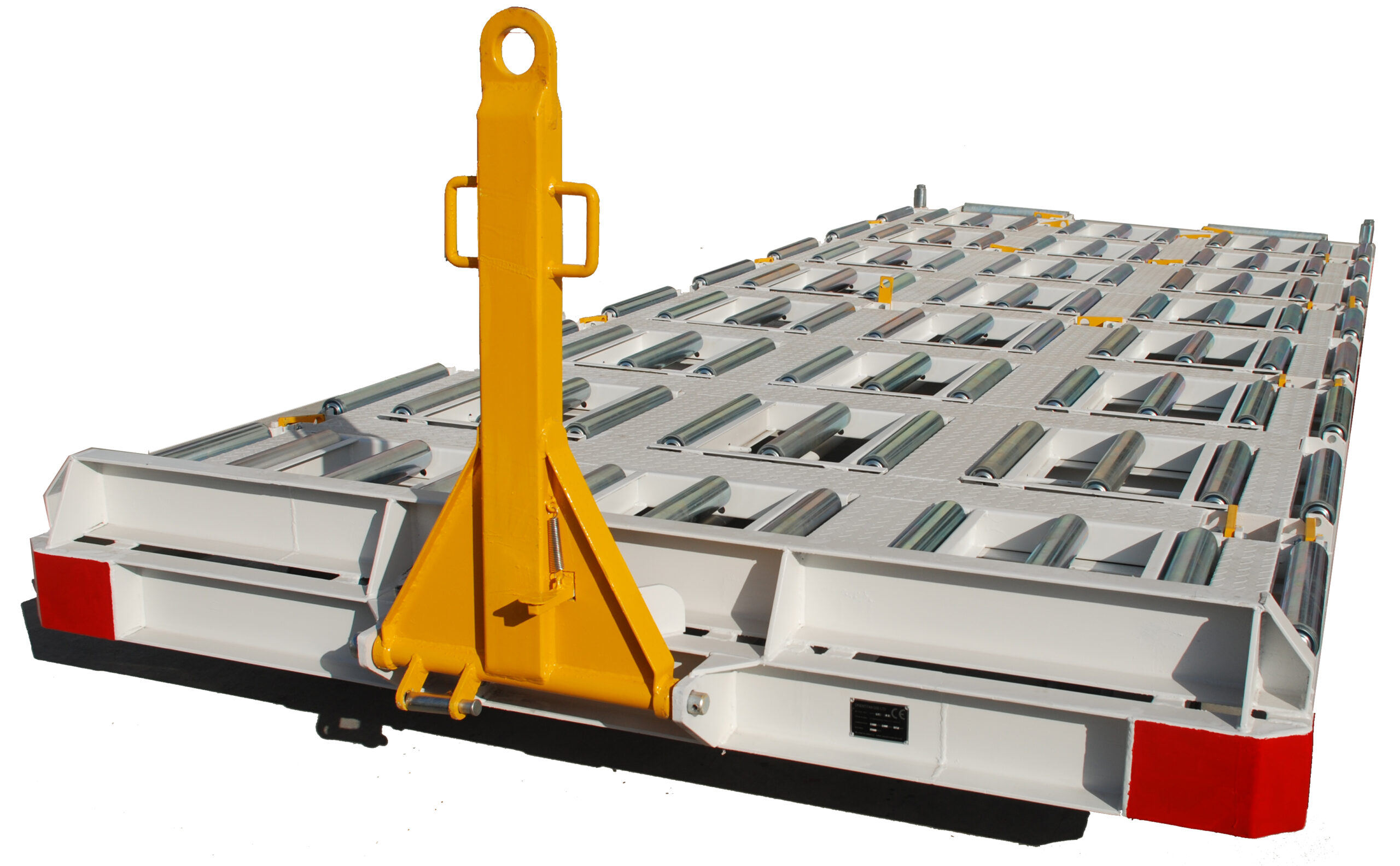
Walk ways, tow bar, tow hitch, container stops, NO STEP between each roller.
Painted red
Hand brake handle
The pallet trailer is capable of transporting, any of the following:-
ONE (1) Trent engine Rollover transports HU55418 –the stop will be arranged as per information supplied by customer.
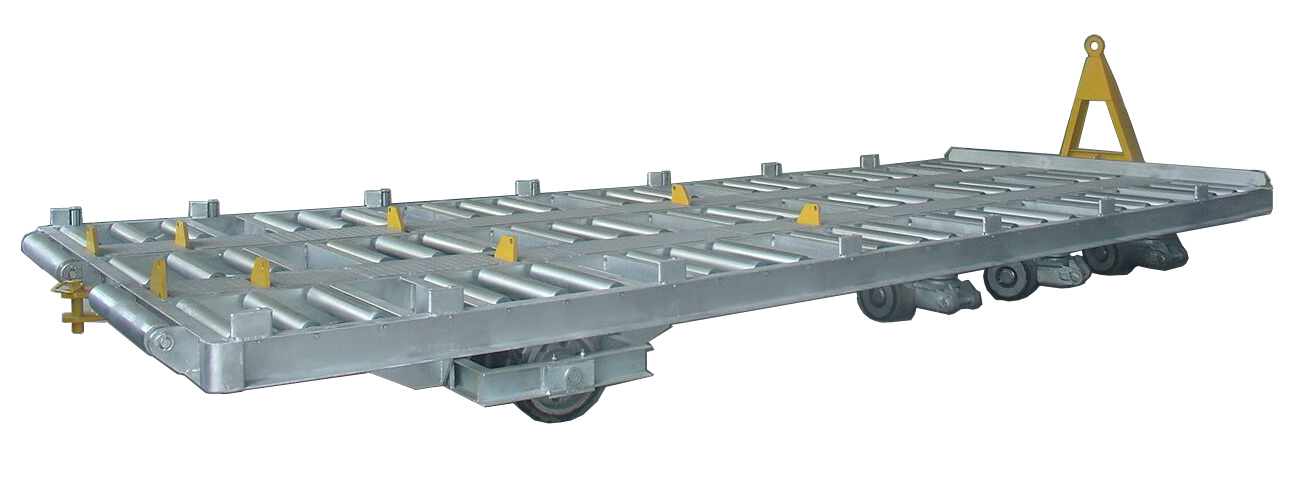
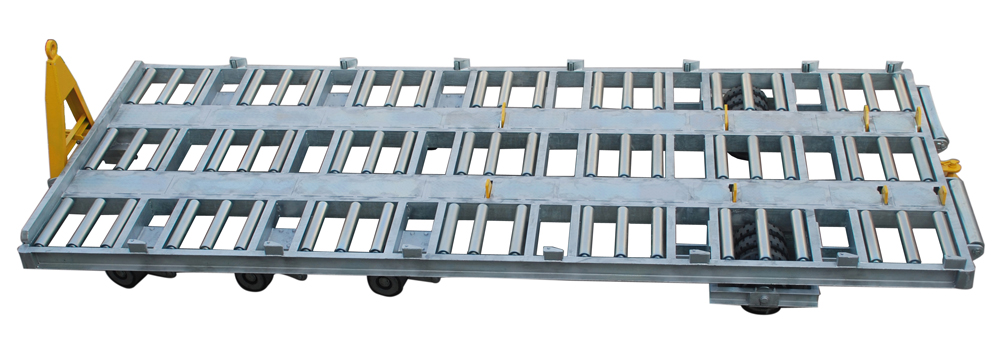
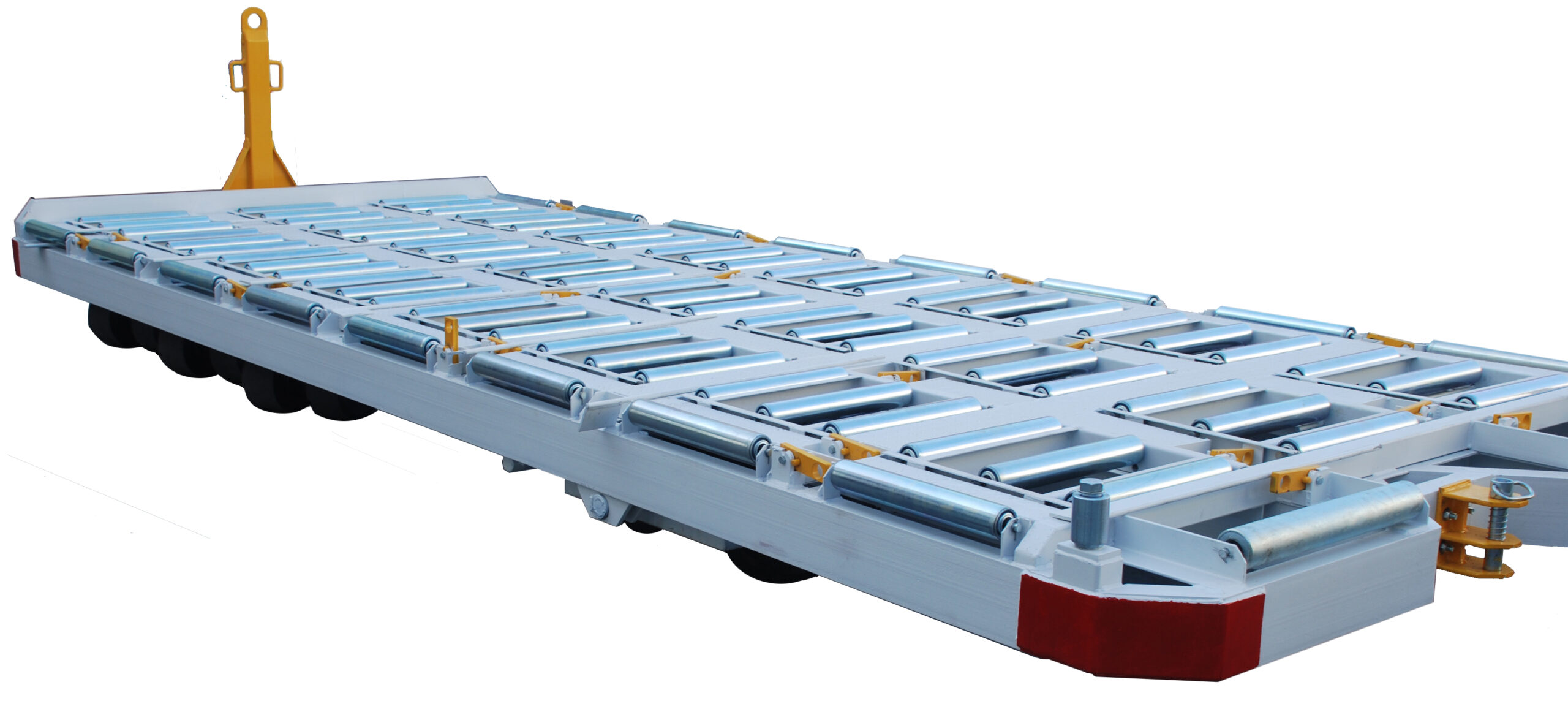
Roller deck for efficient load transfer
The trailer’s roller deck allows compatible pallets, containers and specialised loads to be transferred between the trailer and suitable loaders, transporters, racks or warehouse systems.
Load stops are positioned to restrain the intended cargo configuration. For specialised equipment, including the Trent engine rollover transport HU55418, the stop arrangement can be configured using dimensions and technical information supplied by the customer.
All proposed loads and configurations should be confirmed with Hydeng GSE before manufacture.
## Specialised engine transport capability
The trailer can be configured to carry one Trent engine rollover transport, model HU55418.
Because engine transportation involves specialised load dimensions and restraint requirements, Hydeng arranges the applicable stops according to customer-supplied information. The final configuration should be confirmed against the specific transport frame, operational procedure and equipment interface.
High-visibility safety identification
Key working and operating areas are painted safety yellow to improve visibility for ground personnel.
These areas include:
- Walkways
- Towbar
- Tow hitch
- Container stops
- No-step areas between rollers
The handbrake handle is painted red, allowing operators to identify the parking-brake control quickly during pre-use checks and equipment operation.
Applications
The Hydeng GSE 20-Foot Low-Profile Trailer can support compatible loads moving between:
- Aircraft cargo loaders
- Airport transporters
- Cargo terminals
- Freight warehouses
- Storage and transfer racks
- Aircraft maintenance facilities
- Engine handling and maintenance areas
- Airport ramp staging locations
It is suitable for airlines, airport operators, ground handling companies, air-freight businesses, maintenance organisations and defence aviation operations.
Configured around the intended load
Cargo-handling requirements vary between aircraft, airports and operators. Before manufacturing a trailer, Hydeng GSE can review the intended load, dimensions, handling procedure and equipment interfaces.
Depending on the application, considerations may include:
- Pallet or container dimensions
- Load orientation
- Roller-deck arrangement
- Position and type of load stops
- Towing compatibility
- Braking requirements
- Walkway placement
- Fleet identification
- Operating environment
- Compatibility with existing loaders and storage systems
For specialised loads, customers should provide current technical drawings, dimensions and restraint requirements wherever possible.
Standards and compliance
Hydeng GSE designs and manufactures equipment with consideration for applicable workplace health and safety, aviation ground handling, plant safety and structural requirements.
The existing trailer documentation references:
- Applicable Australian workplace health and safety requirements
- International Air Transport Association guidance
- Applicable Australian and New Zealand structural steel requirements
- Plant safety requirements
The standards, codes and customer specifications applicable to each new trailer should be confirmed during the quotation and engineering process. Supporting technical or compliance documentation can be discussed with Hydeng GSE.
Australian GSE engineering and support
Hydeng GSE is an Australian-owned aircraft ground support equipment specialist based in Brisbane.
Since 1982, Hydeng has provided custom GSE design, structural fabrication, manufacture, prototyping, testing, inspections, servicing and replacement parts.
This whole-of-life capability gives customers access to technical support during equipment selection, manufacture and continued operation.